A neighbourly flyer with news and sundry writings from Swindon in Anglish.
Summer's Here With Bells On!
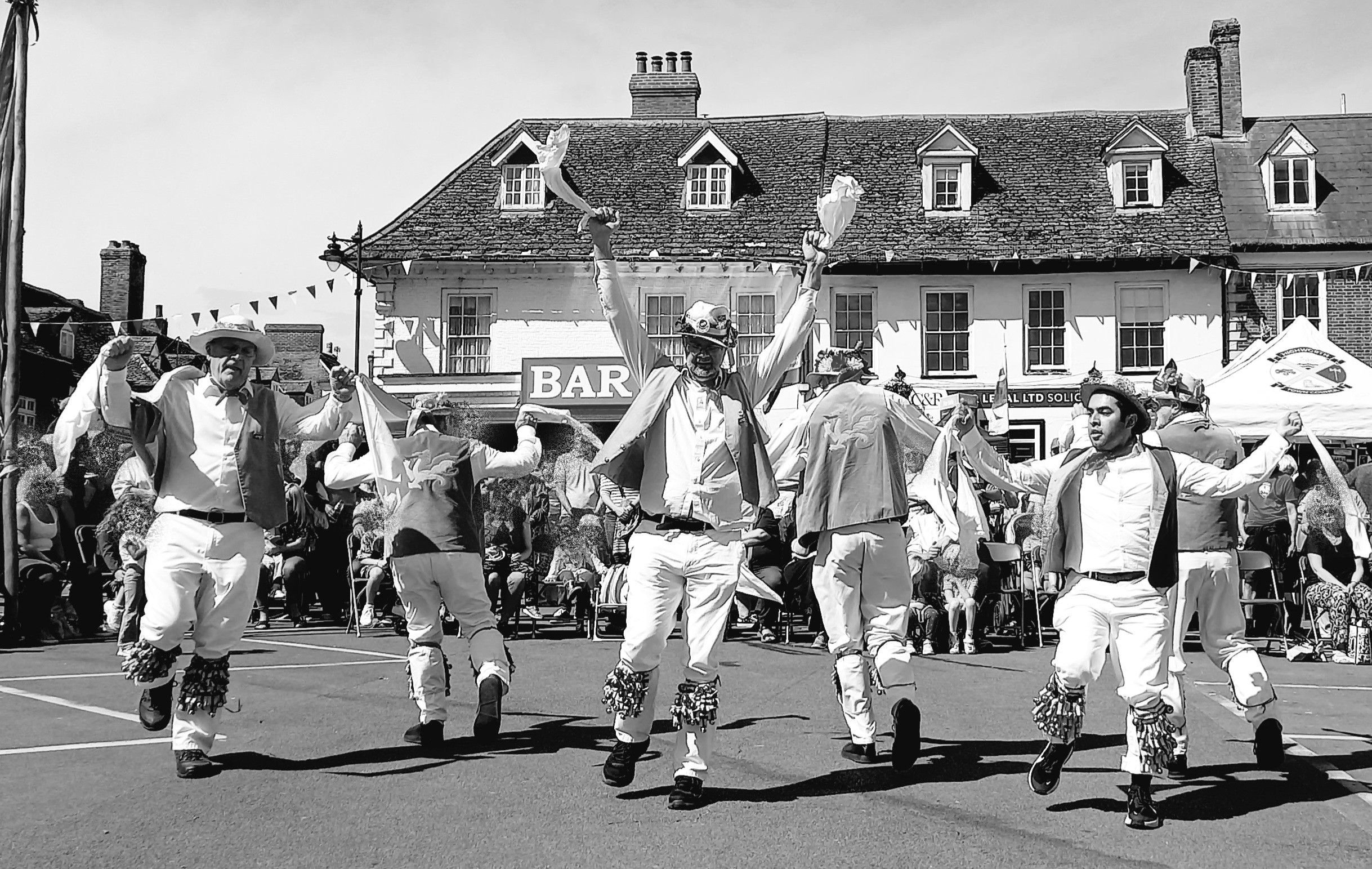
Bellsteppers in Highworth, 2026. Ragman
The sun shone down on the morning of Highworth's May Day Fair. In the middle of town happy crowds of summery folk milled about. There were stalls along the high street and a small showground in front of a lifted deck.
Rightly, this time is a holiday for bellsteppers. They come to the Highworth fair every year in their smart overshirts and blossom hats. This time I listened to one man playing sing song on the bellows, while a team skipped and jingled through the steps. The whole light hearted todo left me very happy.
The church belltower was also open to look in. I climbed the tight spinning stairs and they gave me a bit of a closed-in fright, with stone against both my shoulders. First came the room with the pull-ropes for the bellringers and then further up to the bells themselves. The heavy bells were each cast with writing on. Some had names and years: the oldest two were made in 1689 by Henry Bagley. Later in the day folk were allowed to go on the roof of the tower, but I missed out on that. Highworth is the highest town in Wiltshire so it would have been a good sight.
A passerby showed me a deep mark in the front of the church which is said to have been a heavy shot from fighting in the sixteen hundreds. The church still has the ball that is said to have made the hit.
It has been a trend to mark this time of year for a long, long time. It is an old holiday from Scotland and Ireland called Beltane and a holiday from Wales called Calan Mai. It is a time to mark the change from winter to summer. An English trend is called Jack in the Green, who is someone in a leafy getup looking like a walking bush.
A bushman came to Highworth for the day and roamed around the town followed by drummers and a piper all clothed in leafy green. It was a merry show to welcome in the warmer months.
In a lot of the world May day is also a time to mark the fight for workers rights.
Wessex And Wiltshire Day
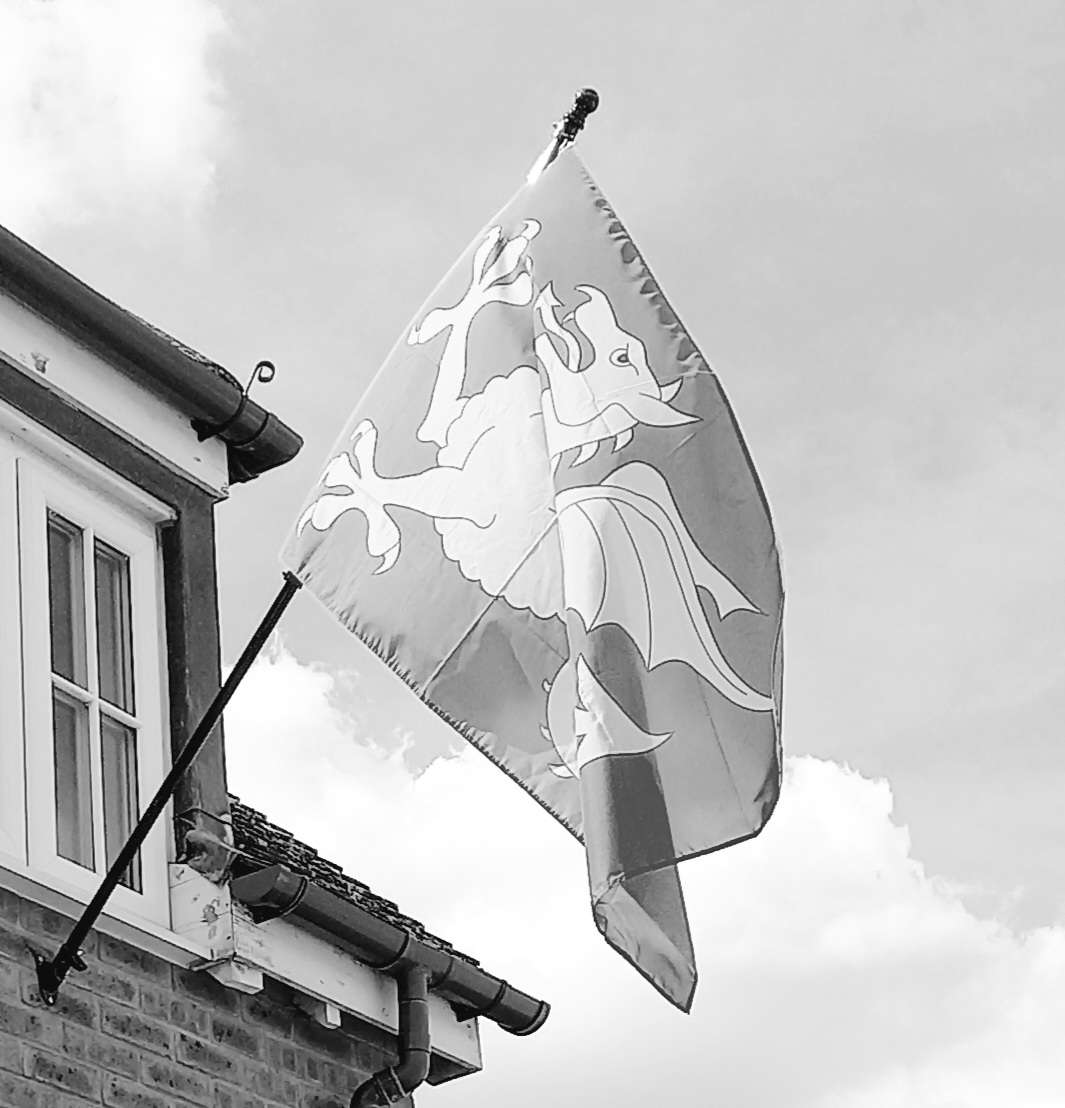
The Wessex flag is a gold wingsnake on a red background, 2024. Ragman
The holyman who has been marked out for Wessex was called Aldhelm. He was a leader of the Malmesbury church in the six and seven hundreds. His way of spreading the good news was to put on a fun show; he sang and would lark about. He also wrote a lot of riddles. His holyday is on the 25th of the 5th month, so that is said to be Wessex day. (Wessex is the old Kingdom of the South West.)
Shires are marked out in more than one way. In the way they are marked out by the king, Swindon is in Wiltshire. However, the other overseers of the land mark Swindon as its own shire. This leads to the odd happening that Swindon is both in and out of Wiltshire. This is a bit of fun, I think. It's nice to do things in an odd way when it doesn't hurt anyone.
Wiltshire day comes from the song that's marked out for the shire. It happens on the 21st of the 5th month and comes from the song 'The Vly be on the Turmut' (which means 'the fly is on the turnip'). The beginning of the song goes like this: 'T'were on a jolly zummer's day, the twenty-vust o' May'. It's about a turnip harvester shielding his turnips from flies. Wonderful!
Swindon Borough Leadership Poll
The Conservatives got the most seats of any team, but not enough to lead the borough on their own. If the other teams all went against them, the Conservatives would not have enough seats to do what they wanted.
Swindon has been said to be a bellweather for the whole of the land, meaning it should show which way the land would go as a whole. Not this time, though. Across the land, Conservatives have done worse and Reform better than in Swindon.
At first, Conservatives said they wouldn't work with Reform but they might work with Labour when needed. However, Reform have ended up standing behind the Conservative leader, Gary Sumner, to setup his leadership of the Borough. They needed another team to work with them to get it started, Labour did not. It looks like Conservatives and Reform also worked together by choosing each other to be the chair at sundry meetings. Folks from Reform became the chairs of several meetings and Labour didn't. The Conservatives say they didn't make a deal, but the Labour leader thinks otherwise.
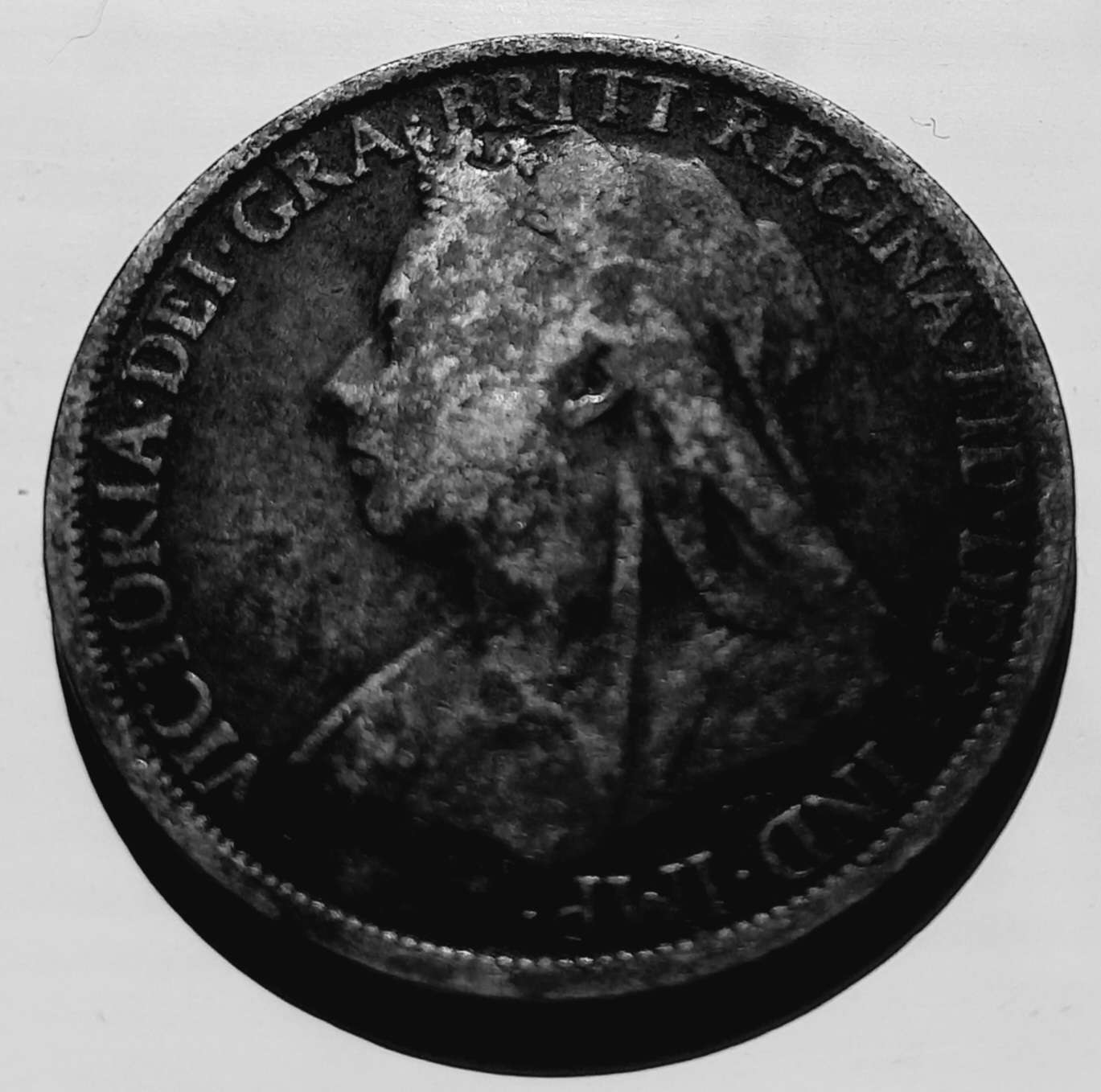
An old penny from 1900 showing the head of Queen Victoria, 2026. Ragman
Swindon has been a borough for 126 years. It was the last town to be made a borough by Queen Victoria in 1900. It was made over again in 1974 when Highworth was put together with Swindon and called Thamesdown. Before this, Highworth's land was larger than Swindon's. It went around Swindon to the North, East, and South. Stratton came under Highworth; so did Wanborough and Wroughton.
In 1997 it was made new again. It was cut off from Wiltshire and became the Swindon borough that we have today.
Other Flyers
Blasting the hooter to mark forty years since the Great Western works closed: Having a Hoot in Swindon
Desmond Morris has died lately at ninety eight. He was a Swindoner, well known for learning and writing about wildlife but also for crafting odd likenesses. Some of the likenesses he made are in the showrooms: 'Museum and Art Swindon' . He was best known for his book, 'The Naked Ape', which looked at mankind as if it was any other living being.
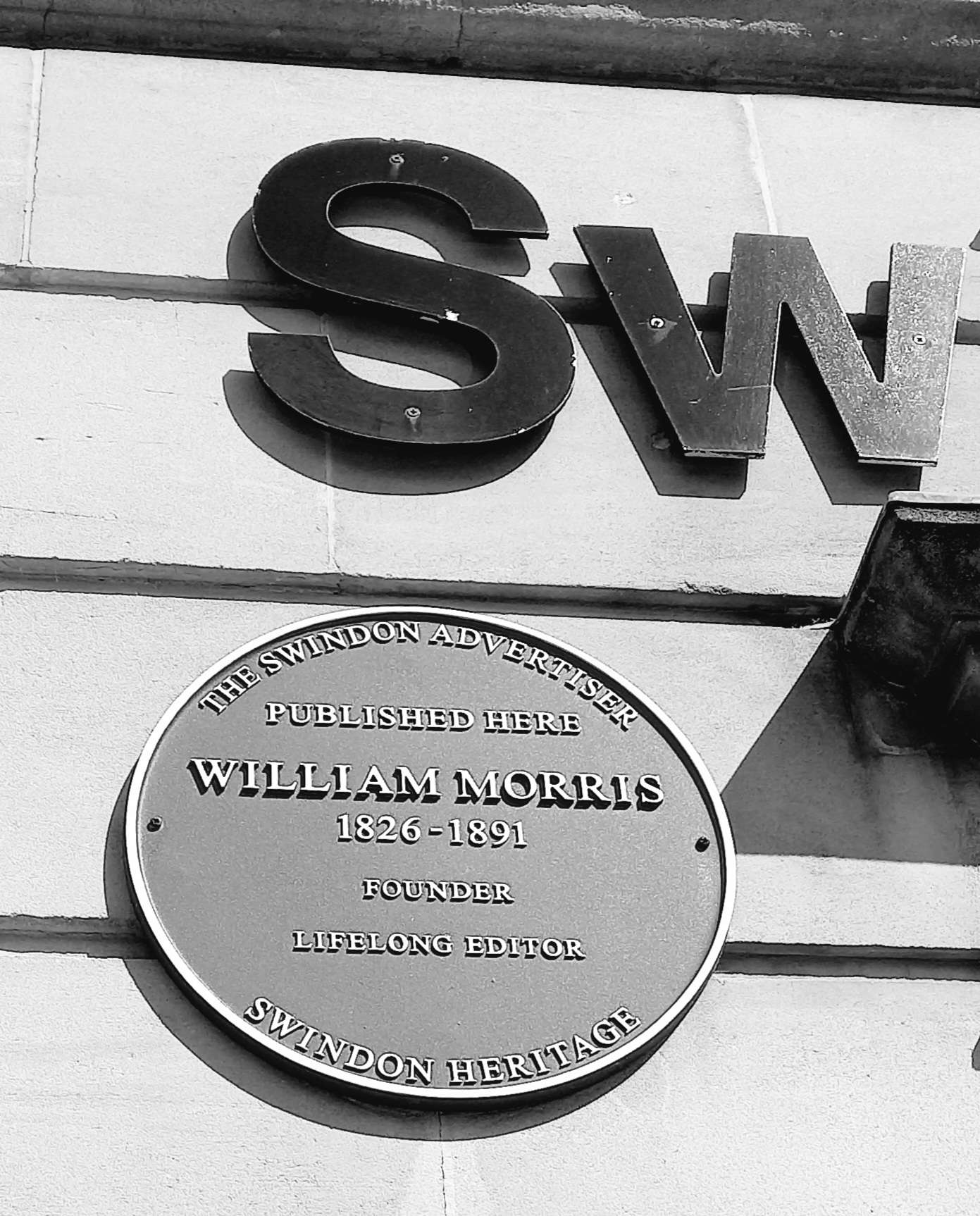
Desmond Morris had dealings with other well-known swindoners. He went out with the Swindon born filmstar, Diana Dors, when he was young. Also, his great grandfather, William Morris, founded the Adver and spoke up for folk in Swindon over many years. It has been two hundred years since the older Morris was born and there is a show marking his life at Museum and Art Swindon.
A marker on the side of the old Swindon Adver building, 2026. Ragman
This William Morris shouldn't be mixed up with another more well-known William Morris who lived around the same time but was not from Swindon. The other one is known for pretty wall sheeting, among many other things. Towards the end of his life, he lived not so far away in a great house outside Lechlade. It's called Kelmscott Manor and you can still go to see it.
Morris came to be a name by more than one path, some by Irish and some by French. One way meant 'marsh' and another way meant 'Moor' (as in, Islamic folk).
Morris stepping got its name as it was said to come from another land when it first showed up in England in the fourteen hundreds.
Swindon Town's Big Showdown
Swindon had to win against Chesterfield. The rankings meant that the winner could still go up. Both teams were fighting not to lose and stay down. Swindon Town's foreman, Ian Holloway, said 'It's all in your hands,' as it all came down to their own game.
Holloway had been sent off in an earlier game and wasn't allowed to stand on the ground at this one. It's said he spoke badly.
Ahead of the game, Swindon followers that I spoke to didn't think they had good odds. A few said they couldn't get a seat as it was already full, but they didn't want to go anyway as they thought the team would play badly (one of them still ended up going). Swindon played well in the first half of this year's games, but lost their good standing in the last half.
In the end, they lost their last hope of going up 2-1. That's the end of this year's football time, and we'll have to wait for next year to be better.
Swindon Town is an old club, it began in 1879. The ground has a stand named after Don Rogers, who was the star of the team when Swindon won against Arsenal in 1969 to win the League Cup. Fleming Way is also named after a Town player (not Ian Fleming who wrote James Bond and lived in Sevenhampton). Harold Fleming played for Swindon for almost 20 years, starting in 1907. He was the only player to play for England while at Swindon and you can see a blue marker on his old house in Durham Street.
Sumer Is Icumen In!
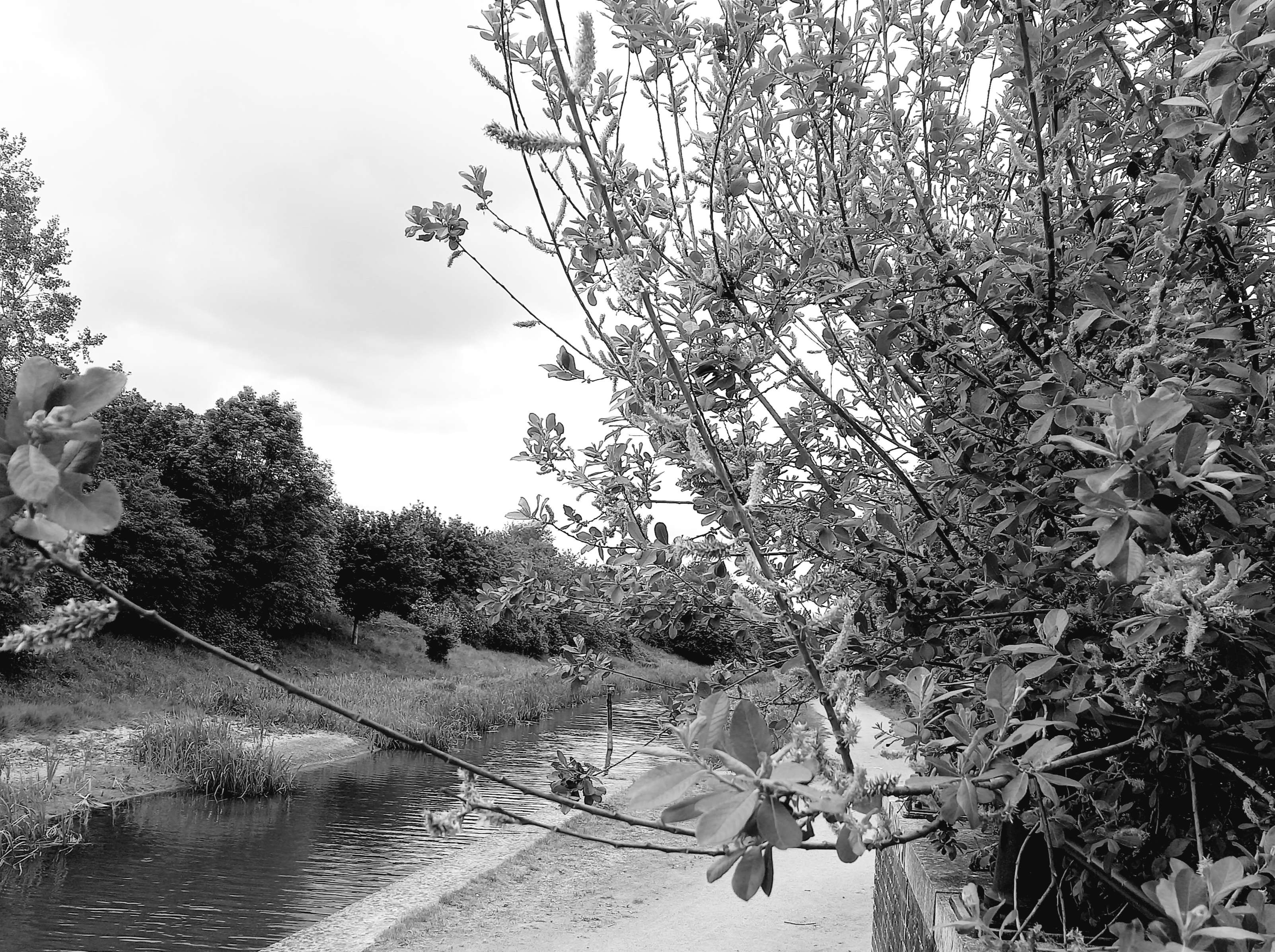
A willow tree with catkins on the Wichelstowe boatway, 2026. Ragman
One of the oldest songs we still have in English is about this time of year. It is written in an old way of speaking, called Middle English. The way it was was also the way they spoke it here in Wessex. The name of the song is 'Sumer is icumen in' which means something like 'summer is coming in'. Lots of the words are only a little away from our words today.
The first bit of the song goes like this:
Sumer is icumen in (Summer is coming in)
Lhude sing cuccu (loudly sing cuckoo)
Groweth sed (Grow seed)
and bloweth med (and bloom meadow)
and sprinth the wde nu (and spring the world anew)
The song is a lot about farm livestock and what they get up to in spring. It is joyful about the world growing.
This time of the year is the first of the three sneezing times: tree sneezing time. Later is grass and weed sneezing times.
The writer Bede says in his book (in the year 725) that the English called this month Three-milk month as cows could be milked thrice daily at this time of year. He also said that they cut the year only in two, into summer and winter. They didn't talk about spring or fall. So back then, the beginning of summer was around now.